The Real Cost of the Flu: A Comprehensive Guide to Preventing Outbreaks in Toronto Offices
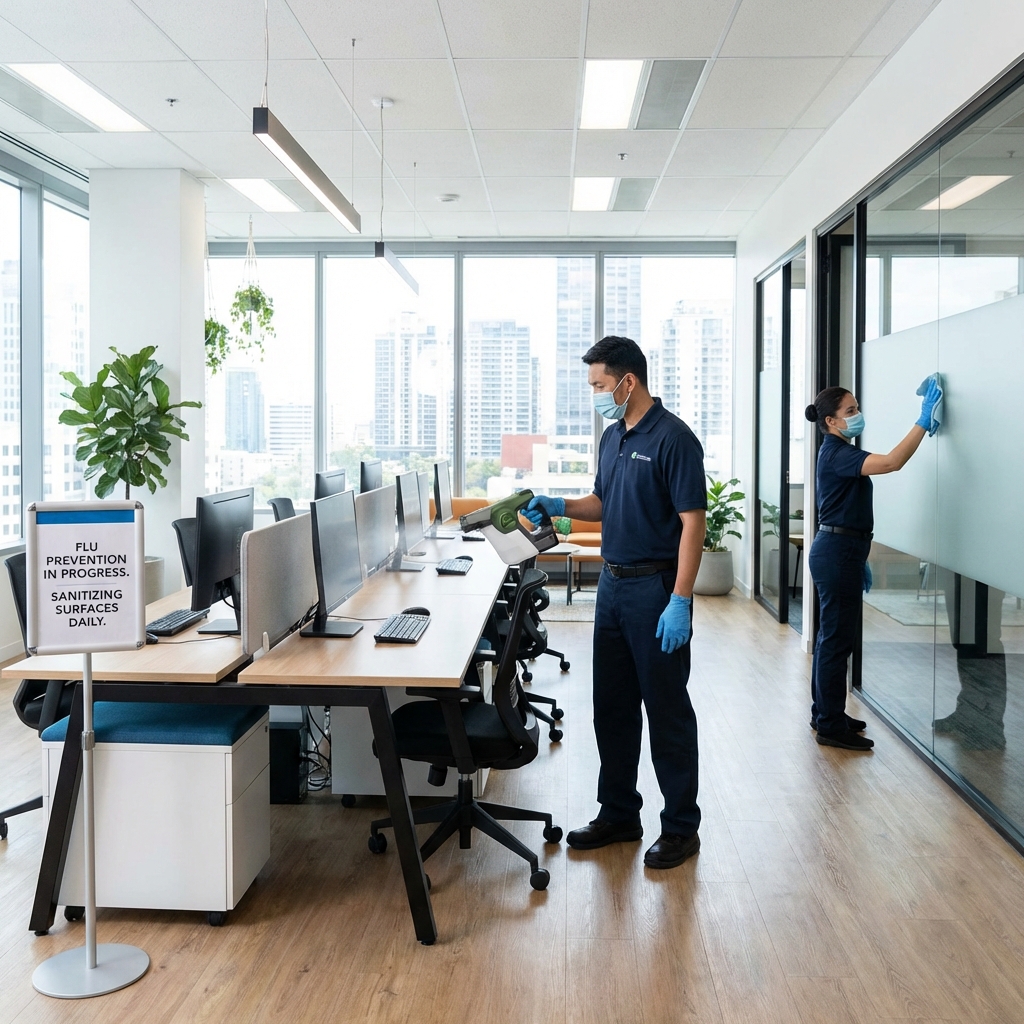
As winter settles over Toronto, so does the annual threat of seasonal influenza, norovirus, and the common cold. For business owners and facility managers, "flu season" isn't just a public health advisory—it's a significant operational risk. A single sick employee coming into the office can trigger a chain reaction, leading to widespread absenteeism, missed deadlines, and a direct hit to the bottom line.
The Staggering Cost of Presenteeism and Absenteeism
While absenteeism (employees staying home) is a visible cost, "presenteeism"—sick employees coming to work and functioning at partial capacity—is a hidden productivity killer. It creates a double negative: the sick employee does poor work, and they infect their healthy colleagues. In Canada, lost productivity due to illness costs the economy billions annually. Investing in a robust cleaning and prevention strategy is far cheaper than paying for a week of empty desks.
Understanding the Transmission Chain
To stop the flu, you must understand how it moves. Viruses don't just float in the air; they settle on surfaces and wait. Influenza viruses can survive on hard surfaces like stainless steel and plastic for up to 48 hours. Norovirus can persist for days or even weeks.
In a typical office, the transmission chain looks like this:
- Sick Employee touches their face, then the coffee pot handle.
- Healthy Employee pours coffee 10 minutes later.
- Healthy Employee returns to their desk, eats a snack, and introduces the virus into their system.
- The cycle repeats exponentially.
The Critical Difference: Cleaning vs. Disinfecting
Many offices believe they are safe because they are "cleaned" daily. However, there is a critical distinction in terminology:
- Cleaning: Removes visible dirt, dust, and debris. It physically lowers germ counts but does not kill them.
- Sanitizing: Lowers the number of germs to a safe level as determined by public health standards.
- Disinfecting: The chemical process of killing 99.999% of germs on a surface.
During flu season, a wipe-down with a damp cloth is insufficient. You need an aggressive disinfection protocol using hospital-grade products with the correct "dwell” time" (the time the surface must remain wet to be effective).
Strategic Prevention: The "Break the Chain" Protocol
At Clearo, we implement a targeted strategy designed to break the chain of infection at its most vulnerable points:
1. Identifying and Targeting "Hot Spots"
We don't just clean floors; we obsess over the surfaces hands touch most often. Our protocols increase the cleaning frequency of:
- Door handles and push plates
- Elevator buttons (inside and out)
- Light switches
- Shared printer touchscreens
- Kitchenette appliances (microwave, kettle, fridge handles)
- Vending machine buttons
- Water cooler taps
2. Professional Day Porter Services
Night cleaning resets the office, but germs spread during the day. A Day Porter acts as a firewall, continuously disinfecting high-touch zones while the office is active. They ensure that the meeting room door handle is sanitized *between* meetings, drastically reducing transmission risk.
3. Empowering Employee Hygiene
Facilities management plays a role in behavioral change. We help you place hand sanitizer stations strategically—at entrances, outside restrooms, and near food areas. We ensure soap dispensers are never empty and that touch-free paper towel dispensers are functioning perfectly.
The Role of Electrostatic Disinfection
For a comprehensive defense, we recommend periodic electrostatic spraying. This technology charges disinfectant particles, causing them to wrap around surfaces and coat hidden areas that manual wiping misses—like the back of door handles or the undersides of chairs.
Think of it as 3D coverage. While a rag can only clean what it touches (line of sight), electrostatic spray envelops the target, ensuring 100% surface kill of pathogens.
The Case for a "Clean Desk" Policy
One of the biggest barriers to effective disinfection is clutter. You can't sanitize a desk if it's buried under papers, personal photos, and old coffee cups. A "Clean Desk Policy" requires employees to clear their workspace at the end of the day.
This isn't just about tidiness; it's about accessibility. If a cleaner has to lift a stack of files to wipe a desk, they risk disorganizing your work. Often, they will simply wipe around the clutter, leaving germ hotspots untouched. By clearing the surface, you empower the cleaning team to do their job effectively.
Air Quality: The Invisible Vector
While surface transmission (fomites) is a major concern, we now know that respiratory aerosols play a huge role in spreading flu and COVID-19. Increasing your HVAC fresh air intake and upgrading to MERV-13 filters is a facility-level decision that pays dividends.
For high-density areas like call centers, portable HEPA air scrubbers can provide an extra layer of protection, constantly filtering out viral particles from the breathing zone. Keeping humidity levels between 40-60% also helps, as viruses survive longer in dry air and human mucous membranes are more resistant when hydrated.
The Financial Logic: ROI of Prevention
Facility Managers often face pressure to cut cleaning budgets, but during flu season, "saving" money on cleaning is a false economy. Let's look at the math.
According to Statistics Canada, the average daily wage is roughly $240. If a single employee takes 3 sick days, that is a direct cost of $720—plus the intangibles of missed deadlines and burden on other staff.
If that employee infects three others (a conservative estimate for influenza in an open office), the cost jumps to nearly $3,000 for a single localized outbreak.
The Investment: A specialized electrostatic disinfection service might cost a fraction of that loss. When viewed as risk mitigation—similar to insurance—preventative cleaning offers a massive Return on Investment (ROI) by keeping your revenue-generators (your people) online.
Specific Protocols for Open-Plan Offices
Open-concept offices are fantastic for collaboration but terrible for infection control. With no walls to block sneezes and shared "hot desks," germs travel freely.
To combat this, we recommend:
- Clean Desk Policy: Require employees to clear their desks at the end of the day. Cleaners cannot effectively sanitize a desk covered in papers, personal items, and coffee cups. A clear surface is a cleanable surface.
- Sanitizing Wipes for "Hot Desking": If employees share desks, provide canisters of disinfectant wipes. Establish a culture where the user wipes down the keyboard, mouse, and phone before and after use.
- Air Purification: Consider portable HEPA air scrubbers for high-density areas. These machines continuously cycle the air, trapping airborne viral particles that standard HVAC filters might miss.
The Psychology of "Visible Cleaning"
In times of heightened health anxiety, seeing is believing. Historically, cleaning was done invisibly at night. Today, visible cleaning provides psychological safety.
Having a Day Porter wiping down the reception desk or the elevator buttons during the morning rush sends a powerful non-verbal message: "This building is safe. We care about your health." This resulting confidence reduces employee anxiety and reluctance to return to the office.
Don't let the flu dictate your q1 profits. Take control of your office environment. Contact Clearo today to implement a targeted flu-prevention cleaning strategy that keeps your team healthy, happy, and productive.